The software behind a robot arm, given away for free
At ROSCon 2026 in Toronto, Alphabet's robotics unit Intrinsic released Intrinsic Core, the foundational software layer it uses to run industrial robot arms, under the Apache 2.0 open-source license. Rather than a finished product, it is the plumbing: the real-time control, motion planning, grasping and calibration code that normally has to be built or licensed separately for every robot, gripper and camera combination on a factory floor.
The release is compatible with ROS (Robot Operating System), the open framework most robotics developers already build on, so existing ROS projects can adopt pieces of Intrinsic Core without a rewrite.
What's actually in the box
Six components ship in this release:
- Intrinsic Control - a hardware-agnostic, real-time control framework. It is built to be sensor-driven, meaning a robot running it can adjust its motion mid-trajectory if something in its environment changes, rather than blindly executing a pre-planned path.
- Pose estimation - built on Nvidia's FoundationPose model, letting a robot identify a part's exact position and orientation in six degrees of freedom without needing the part held in a rigid fixture.
- Motion planning - automatically generates a collision-free path between two points, removing the manual, joint-by-joint programming that industrial robot integrators have historically done by hand.
- Grasp planning - lets a gripper adjust how it closes based on where and how a part is actually sitting, instead of assuming a fixed pickup point.
- Simulation services - a Gazebo-based environment for testing and debugging robot behavior before it runs on real hardware.
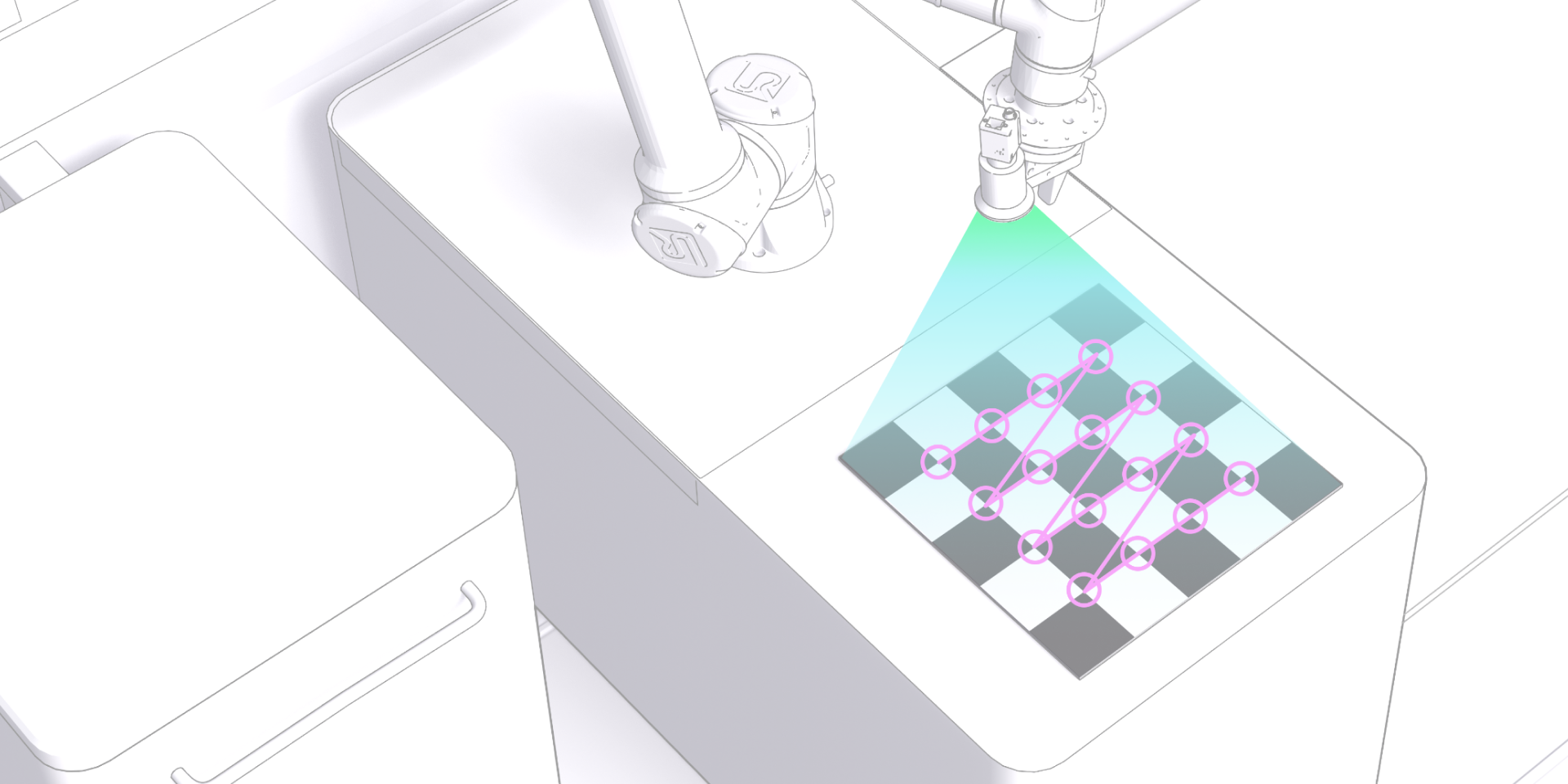
- Camera calibration and Intrinsic-ROS drivers - automated vision-system setup plus pre-built drivers for supported robots, grippers and 3D cameras.
Alongside the core libraries, Intrinsic published a working reference application called the Open Machine Tending Solution: a template for using a robot arm to load and unload parts from a CNC (computer numerical control) machine, built on Intrinsic Core and adaptable to hardware from Fanuc and Universal Robots.
Why Intrinsic is giving this away
Intrinsic's stated reasoning is that physical AI - AI systems that control machines acting in the real world, as opposed to software running purely on screens - has been held back less by algorithms than by the sheer amount of one-off engineering each new robot deployment requires. Every combination of arm, gripper and camera has historically meant rebuilding control and calibration code close to from scratch. By open-sourcing the layer underneath, Intrinsic is betting that developers will stop re-solving that problem project by project.
The company points to a specific gap: only about 8% of machine shops in the United States and Europe currently use robotic automation, held back mainly by cost and the technical difficulty of integration rather than a lack of demand. Software that removes the integration burden is aimed squarely at that gap.
Intrinsic itself was founded in 2021 as a robotics venture inside X, Alphabet's moonshot lab, and was folded directly into Google's operations in February 2026, a move that put its technology on a shorter path to shipping products rather than staying in a standalone research unit.
What this means in practice
For a robotics developer or systems integrator, Intrinsic Core is code that can be pulled from GitHub today rather than licensed or rebuilt. The Apache 2.0 license permits commercial use, including inside closed-source products, which matters for integrators who sell finished robotic cells rather than software. The near-term value is clearest for smaller manufacturers and integrators who cannot justify building real-time control and motion-planning software from scratch for a single line - the Open Machine Tending reference design in particular is meant to be copied and adapted rather than studied as an example. Larger robotics companies with their own control stacks have less to gain directly, but will be watching whether a common, free foundation layer starts to standardize how new robotic applications get built.