A robot sold like software
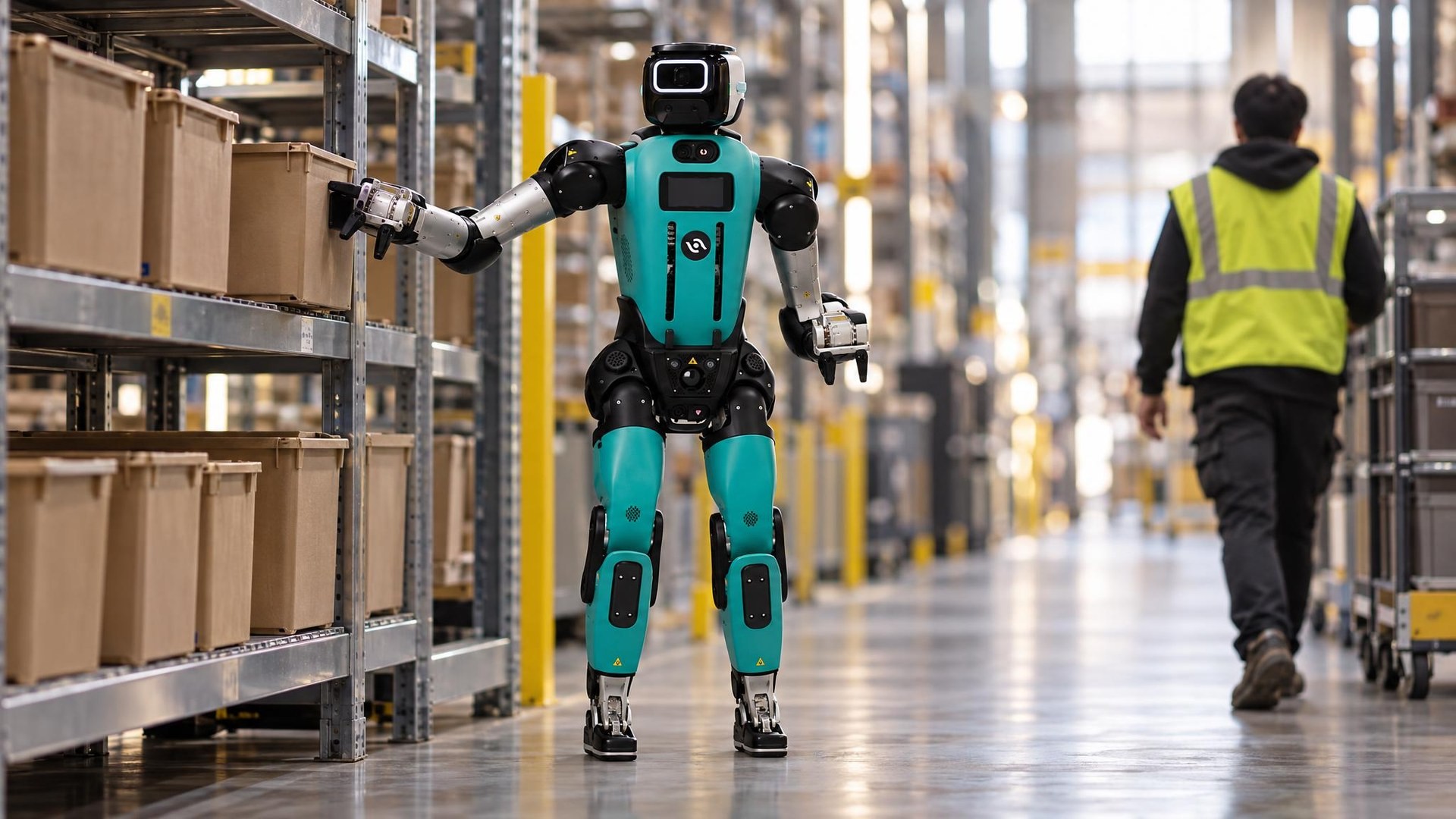
Agility Robotics unveiled its fifth-generation humanoid robot, Digit 5, on September 15, 2026, and the detail that matters most to a warehouse operations budget is not the hardware, it is the price sheet. Humanoid robots have spent the last few years mostly as demo-floor spectacles, expensive to buy and unclear to budget for against an existing headcount line; Agility's pricing is a direct attempt to close that gap by putting a recurring dollar figure next to the robot rather than leaving buyers to guess at total cost of ownership. Agility is offering Digit 5 as a robots-as-a-service (RaaS) subscription at roughly $8,500 a month per robot, about $102,000 a year, plus a one-time deployment fee near $25,000. The alternative is an outright purchase at around $200,000, plus a $20,000 deployment fee and about $36,000 a year for the software and maintenance package that runs on top of the hardware. Either way, Agility is asking logistics companies to budget for a robot the way they would budget for an enterprise software seat, not a capital equipment purchase.
What changed from Digit 4
Digit 5 lifts up to 50 pounds repeatedly, a 40 percent increase in payload over Digit 4. The bigger change is uptime: a 90-minute battery runtime paired with a 9-minute charge gives a 10-to-1 run-to-charge ratio, up from roughly 2-to-1 on the previous generation. Agility says that ratio is what lets a single unit deliver more than 20 productive hours in a 24-hour day, turning what used to be a robot that spent much of its shift charging into one that spends most of it working. Digit 5 stands 5 feet 11 inches tall, weighs 284 pounds, and can reach as high as 7.2 feet.
Why the safety story is the sales pitch
The other headline claim is that Digit 5 became the first humanoid robot to pass an independent field evaluation against industrial safety standards administered by the Occupational Safety and Health Administration (OSHA), assessed directly on a customer's production line rather than in a lab. That distinction matters commercially because most industrial robots today work behind cages or light curtains that physically separate them from people, which limits where they can be placed on a warehouse floor.
Digit 5 instead relies on proprietary AI algorithms and multiple sensors to continuously track nearby people and respond by steering around them, stopping, or sitting down, with visual and audio cues to signal what it is about to do next and an independent safety controller that supervises the response whenever someone enters an unsafe distance. Agility is the first launch partner for Nvidia's Halos for Robotics platform, building that safety layer on Nvidia's IGX Thor and Halos Core hardware. Passing the OSHA evaluation without cages is the argument for deploying Digit 5 in denser, shared workspaces than earlier humanoids have managed.
The demand Agility is pointing to
Agility says it already has more than $300 million in multi-year customer orders as of May 2026, and points to deployments already running with GXO, Schaeffler, Amazon, and Toyota Motor Manufacturing Canada. Across those Digit 4 deployments, the company reports more than 65,000 cumulative operating hours, including one facility that reached a 100,000-tote handling milestone at roughly 98 percent accuracy. That track record is doing the work of persuading logistics buyers that a general-purpose humanoid can hold up to the repetition of a real warehouse shift, not just a demo floor.
Timeline
Agility is not shipping Digit 5 immediately. Early access is expected in the first half of 2027, with general availability by the end of 2027, starting in North America before expanding to the European Union and the United Kingdom.
What it means in practice
For a logistics or manufacturing operator, the RaaS number is the one worth running against current labor and automation costs: at roughly $127,000 in the first year of subscription (deployment fee included) per robot, Digit 5 is priced to compete with the fully loaded cost of a warehouse worker in high-wage markets, not with a fixed conveyor or gantry system. The purchase option, at closer to $256,000 in year one once deployment and the required software and maintenance package are added, is the path for operators who want the asset on their own books rather than a recurring vendor bill. Either way, the 2027 delivery window means this is a planning decision for next year's budget, not an immediate hire.