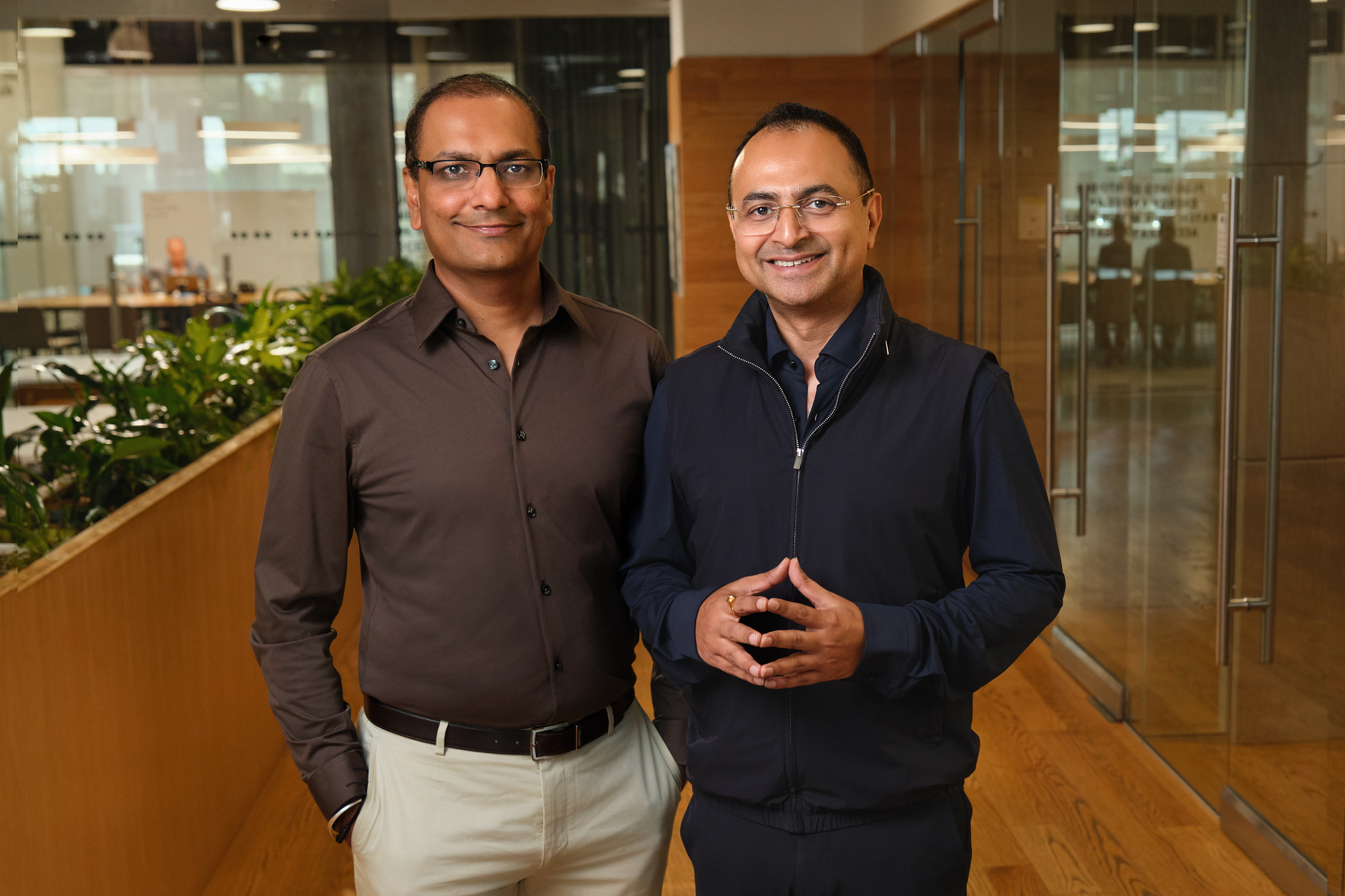
Skan AI, a Menlo Park, California-based enterprise software company, has closed a $63 million Series C round, the company announced on August 12, 2026. The round was co-led by Cathay Innovation and Dell Technologies Capital, with Citi Ventures, Bloomberg Beta, State Farm Ventures, and Wipro Ventures also participating, according to Skan AI's funding announcement. The raise brings the seven-year-old company's total funding to roughly $120 million, SiliconANGLE reported.
The pitch is narrower than most enterprise AI raises this year, and that is the point. Skan AI does not build chatbots or agent frameworks. It builds what it calls a context graph of work: a system that watches how employees actually move through enterprise software, screen by screen, and turns that behavior into structured data that AI agents can act on. VentureBeat framed the company's positioning as an observational layer sitting between traditional task and process mining tools and the new wave of enterprise AI agents, rather than a replacement for either.
Why 'watching work' is suddenly fundable
Process mining tools have spent a decade reconstructing workflows from system logs, and process documentation has always drifted from what employees really do the moment a deadline or an exception hits. Skan AI's argument, as described in its funding materials, is that AI agents deployed on top of that gap inherit the gap. An agent trained on the official version of a process will stumble on the workarounds, exceptions, and judgment calls that make up most real work.
Co-founder and chief executive Avinash Misra summed up the framing in the company's release: "Everyone is obsessed with building a better car. We think the bigger opportunity is building a better navigation system." Misra and co-founder Sourabh Garg are childhood friends from Kanpur, India, and classmates at the Indian Institute of Technology; their earlier venture was acquired by Genpact, according to reporting by Unite.AI.
The customer numbers behind the raise
Skan AI says it now works with seven of the ten largest U.S. banks, roughly a quarter of the Fortune 50, and three of the five largest U.S. insurers, per SiliconANGLE's reporting. The company reports having logged more than 25 billion individual work signals across those deployments, year-over-year revenue growth above 300%, and average net dollar retention of 150%, figures disclosed in Skan AI's own announcement.
The most detailed evidence point is a case study at an unnamed top U.S. bank. SiliconANGLE reported that Skan AI tracked 11.2 million context switches across 1,500 finance staff and identified $37 million in operational friction. Misra told VentureBeat that the $37 million figure represents savings opportunities the bank is still working to recoup, not money already banked, an important distinction that separates identified inefficiency from realized results. Where AI agents were actually deployed on top of that context data, Skan AI's own figures put transaction costs down 32%, throughput up 41%, and annualized savings at $18 million.
Where the money has come from
The new round is not Skan AI's first pairing with these investors. Cathay Innovation previously led the company's $14 million Series A, and Dell Technologies Capital led a $40 million Series B that also brought in GSR Ventures and Liberty Global Ventures, according to Unite.AI's reporting on the funding history. Both firms returning to co-lead a larger round suggests conviction built over multiple cycles rather than a first-time bet.
Cathay Innovation partner Simon Wu offered the clearest statement of the investment thesis, telling SiliconANGLE that "enterprise work context is becoming an infrastructure layer for corporate AI in the way customer relationship management software became the system of record for customer data." That is a large claim for a company still built around 25 billion logged signals rather than an established market category, but it explains why two repeat lead investors put fresh capital in rather than waiting for a later round.
Skan AI used the announcement to mark general availability of two new products, Blueprint and Agents, alongside its existing Intelligence offering, positioning the round as much around product expansion as around the funding itself.
The part investors gloss over
Not every implication of watching employees this closely is comfortable. Skan AI maintains that it aggregates behavioral patterns across groups of workers rather than profiling individuals, a distinction Unite.AI's reporting flagged as central to the company's privacy stance. The same reporting also noted that in some deployments, the efficiency gains this technology enables have led customers to cut headcount. Skan AI is not unique in that regard among process automation vendors, but a company whose entire product is a continuous record of how individual employees spend their day sits closer to that tension than most.
What it means in practice
For chief information officers and process owners, the practical signal here is less about Skan AI specifically and more about where enterprise AI budgets are heading next. Buying an AI agent is no longer the hard part; grounding it in how a specific team actually handles exceptions, approvals, and workarounds is. Vendors that can supply that grounding layer, whether Skan AI or a rival building the same category, are positioning themselves as infrastructure rather than another point tool, which is also why repeat investors are willing to write a third check. Organizations evaluating agentic AI rollouts should expect this kind of behavioral instrumentation to become a standard, and increasingly negotiated, part of the stack, with the accompanying workforce monitoring and headcount questions arriving alongside it rather than after.